What to See in Jeju
What is a must see in Jeju? Seongsan Ilchulbong, the Geomunoreum lava tubes (seen at Manjanggul) and Hallasan, its UNESCO site, plus the haenyeo, the waterfalls and Jusangjeolli. Fees, closures and reservations (October 2026).
The must-sees in Jeju are the three parts of its UNESCO World Heritage site, Jeju Volcanic Island and Lava Tubes: Seongsan Ilchulbong, the crater rising from the sea; the Geomunoreum lava tube system, which you visit at Manjanggul; and Hallasan, the volcano in the middle. Add the haenyeo divers, the waterfalls by Seogwipo and the basalt columns at Jusangjeolli. The first two fit one day on the east side. daytours’ UNESCO Natural Heritage private tour covers them with a nationally certified guide in 8 hours, from US$377 for up to three people (checked October 2026).
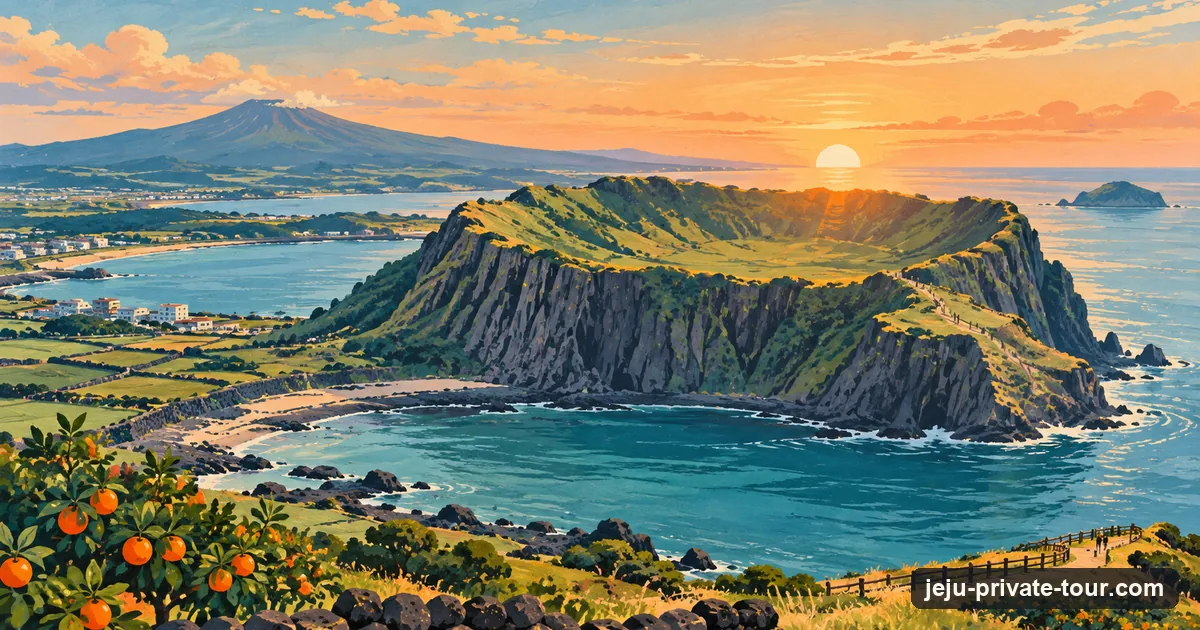
Seongsan Ilchulbong
The name means “sunrise peak”, and it is the island’s emblem: a tuff cone that erupted from shallow sea, with a bowl-shaped crater at the top and cliffs on three sides. The summit is a steep stair climb. Adult tickets are ₩5,000, and the site closes on the first Monday of each month; opening hours change with the season. Come early, for the light and before the coaches.
Manjanggul and the lava tubes
UNESCO calls the Geomunoreum lava tube system the finest in the world, and Manjanggul is the part you can walk into: a tunnel left by flowing lava, cool and dark even in summer, ending at a lava column about 7 m tall. It reopened on 30 May 2026 after a closure that began with a rockfall in late 2023, with about 1 km open to visitors. Bring a jacket and shoes with grip; the floor is wet.
Hallasan
At about 1,950 m, Hallasan is the highest mountain in South Korea, and the whole island is its slopes. The two summit trails, Seongpanak and Gwaneumsa, need a reservation on the Hallasan National Park website, with daily caps of about 1,000 and 500 hikers; the shorter trails, such as Eorimok, Yeongsil and Eoseungsaengak, need none. For a view without the full climb, LOVE KOREA’s South Jeju and Mt Halla day tour walks the Eoseungsaengak trail.
The haenyeo
Jeju’s women divers, who dive for shellfish and seaweed on a single breath with no breathing gear, were added to UNESCO’s list of intangible cultural heritage in 2016. You see them at the Haenyeo Museum, which the UNESCO private tour above visits, and at the divers’ show below Seongsan Ilchulbong, which Lucas Travel’s East Jeju day tour includes when it runs.
The south coast
Around Seogwipo, Jeongbang Falls drops close to the sea and Cheonjiyeon sits in a wooded gorge. West of them, Jusangjeolli is a stretch of coast made of hexagonal basalt columns, with waves breaking against them. The itinerary guide puts them in order with Sanbangsan, the Osulloc tea fields and Hyeopjae Beach.
Pick how you see the UNESCO sites:
UNESCO Private Tour
Manjanggul, the Haenyeo Museum, Seongsan Ilchulbong and the Saryeoni forest path.
Check dates →East Jeju Day Tour
Seongsan Ilchulbong, the haenyeo show and Manjanggul in one 10-hour day.
See the east day tour →Prices and review counts as listed on GetYourGuide in October 2026, not a quote.
Check dates and book
The UNESCO Sites With a Certified Guide
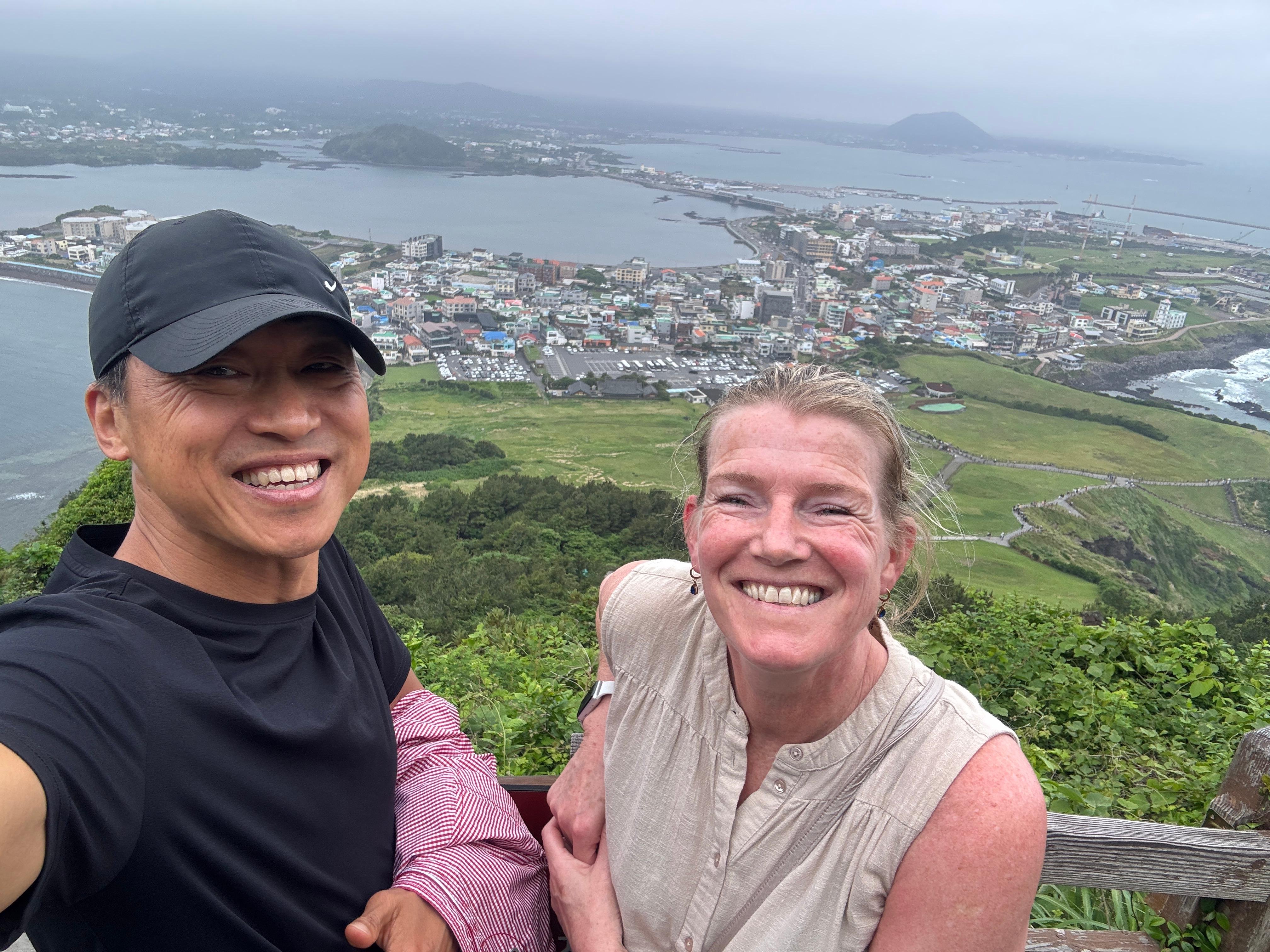
daytours' UNESCO Natural Heritage private tour is 8 hours with a nationally certified English-speaking guide: the Manjanggul lava tube, the Haenyeo Museum, Seongsan Ilchulbong and the Saryeoni forest path, for up to three people. Rated 5.0 from 7 reviews, from US$377 for the group as of October 2026, with free cancellation up to 24 hours before.
Check UNESCO Tour Dates